





Read the Full Series
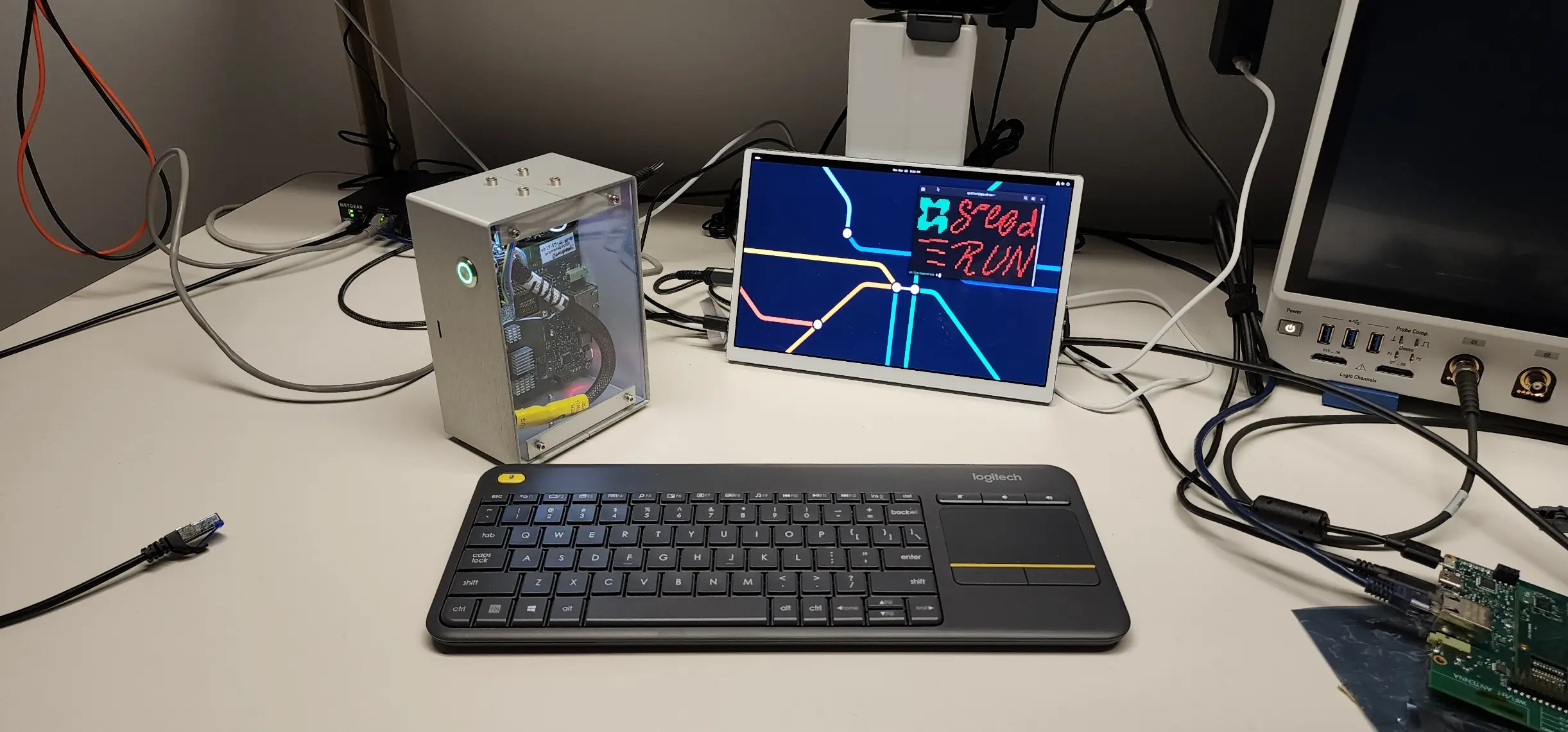
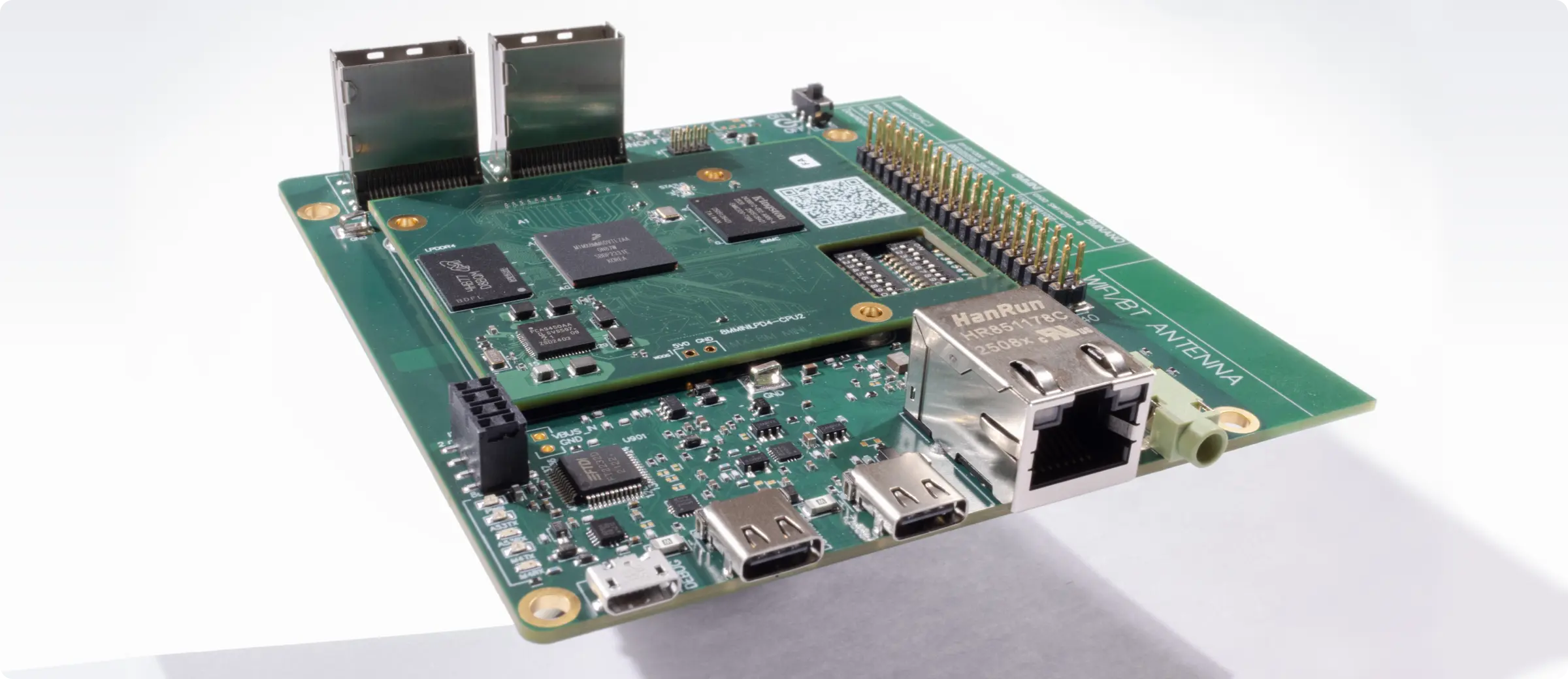
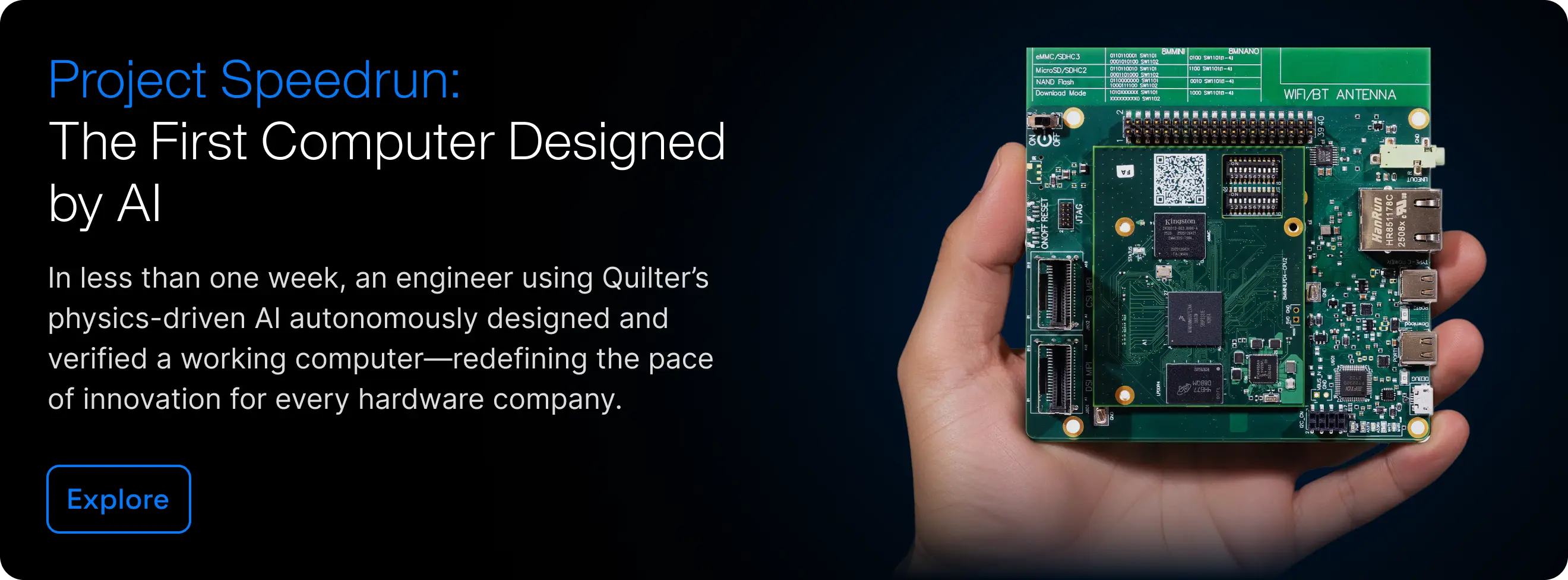
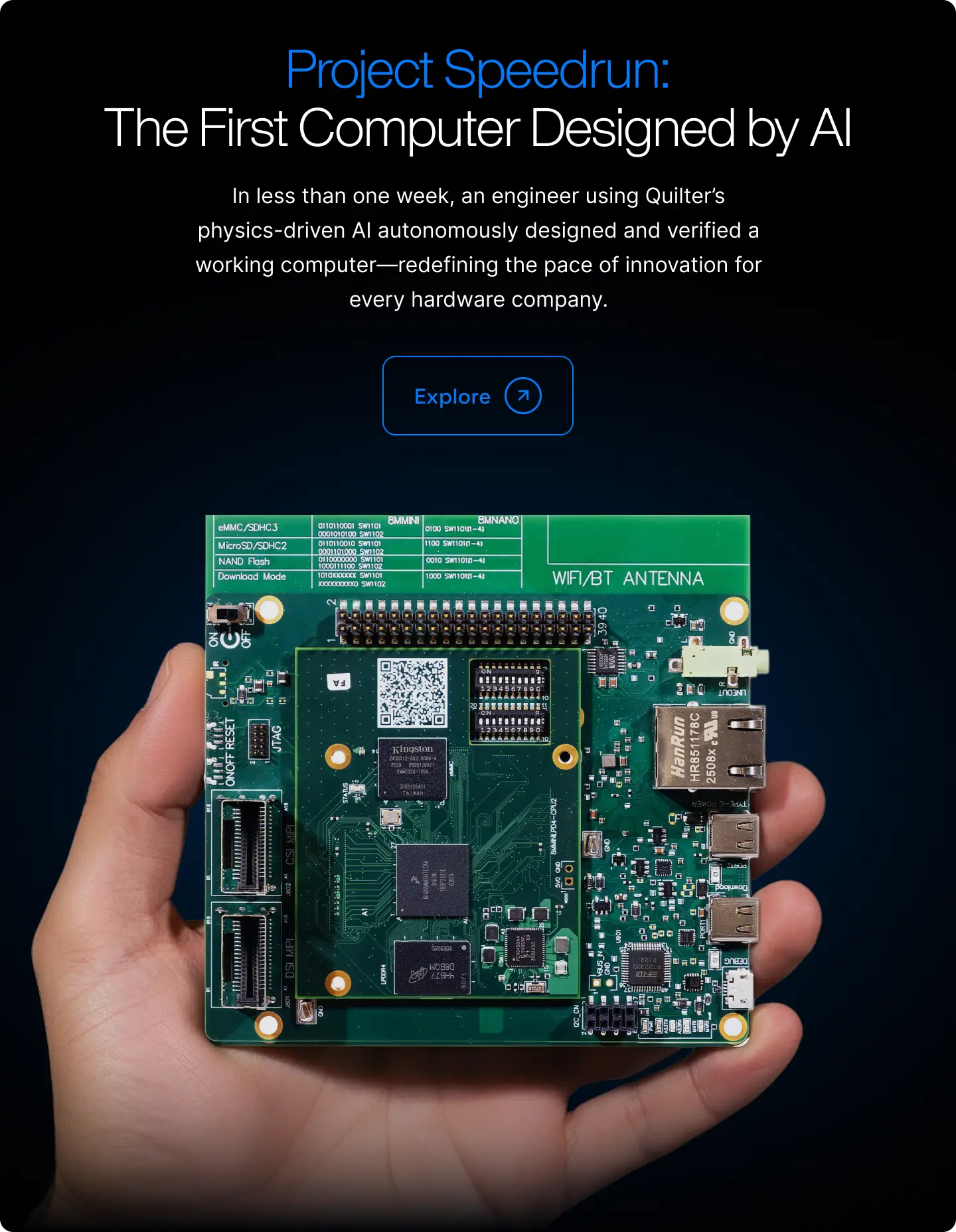
This article is one part of a walkthrough detailing how we recreated an NXP i.MX 8M Mini–based computer using Quilter’s physics-driven layout automation.
Most remote hardware teams try to fix collaboration by changing PCB software. They move to cloud platforms, add more viewers, and schedule more review calls, but layout is still a human bottleneck tied to time zones. This article shows how Quilter’s physics-driven AI router changes the equation, turning PCB layout into an asynchronous, on-demand service that works alongside the tools you already use.
If you are evaluating the best pcb software for remote engineering teams, it helps to be brutally honest about what you are really buying. You are not shopping for a prettier editor. You are trying to buy back iteration speed, reduce coordination overhead, and keep progress moving while half the team sleeps.
Quilter is built for that reality. It plugs into your existing workflow, generates multiple candidates in hours, and runs physics-aware design review so remote teams can review real layouts asynchronously instead of debating hypotheticals in calls. (If you want the product overview first, start here: Product Overview.)
Let’s define the real bottleneck for remote PCB teams today
The hardest part of remote PCB work is not access to files. It is coordination around a single, human-bound layout cycle.
Here is the typical remote layout loop:
- The schematic is “ready enough,” so the team wants routing to start.
- One person becomes the layout bottleneck because routing, cleanup, and DFM tweaks require long blocks of focused time.
- Everyone else waits. Or worse, everyone “reviews” in parallel without a current board state, then discovers the real issues only after routing finally lands.
Remote engineering teams feel this as constant friction:
- Late-night review calls because the only overlap window is small.
- Slack threads that try to replace hallway conversations, but turn into long, ambiguous debates because nobody is pointing at an actual routed candidate.
- Slow turnaround on layout changes, because each change requires a human to stop what they are doing, re-route, re-check, then re-upload for review.
In other words, distributed hardware design breaks when progress is gated by calendar alignment. The collaboration surface area expands, but the throughput does not.
That is why “best PCB software” searches increasingly map to workflow pain, not tool features. When a team asks for the best pcb software for remote engineering teams, they are usually asking:
- How do we get more iterations per week without adding headcount?
- How do we stop treating every review like a high-stakes meeting?
- How do we keep routing moving while the team is offline?
Classic cloud collaboration helps, but it does not remove the core limiter: the work still depends on one person’s time, attention, and availability.
That is the bottleneck Quilter targets. It turns PCB layout into something you can hand off to compute, not just to another human who also needs sleep.
Here’s why classic cloud PCB platforms still feel like meetings in disguise
Cloud ECAD platforms deserve credit. Tools like Altium 365 and other browser-enabled collaboration layers improved real problems:
- Centralized storage and permissions
- Browser viewing for stakeholders who do not have an ECAD seat
- Commenting, markups, and review workflows that are much better than emailing files around
For distributed teams, that is real progress. It reduces version chaos and gives ME, firmware, test, and manufacturing a shared place to look.
But here is the catch: cloud collaboration mainly improves access to the design. It does not change how the design gets created.
Even with cloud ECAD, the heavy lift is still manual routing plus the long tail:
- Placement refinement
- Constraint cleanup
- Return path and plane decisions
- DFM polish
- “One more tweak” cycles that appear after every review
And because that work is still human-bound, remote teams fall back into synchronous loops:
- Engineers wait for “layout to be free.”
- Reviews happen in live calls because nobody wants to lose a full day waiting for the next layout snapshot.
- Iteration speed is bounded by people, not compute.
So cloud ECAD alone can feel like meetings in disguise. You still need overlap time to make progress, and the team still treats each handoff as a major event because generating the next real candidate takes too long.
This is the gap Quilter fills.
Cloud ECAD solves sharing. Quilter solves throughput. Together, they let distributed hardware design move at the speed of asynchronous workflow, where one time zone can set direction, compute can execute, and another time zone can review and decide.
Quick comparison: Cloud ECAD Alone vs Cloud ECAD + Quilter AI
Factor
Cloud ECAD Alone
Cloud ECAD + Quilter AI
Layout speed
Limited by the routing owner’s calendar
Compute-driven layout in hours with multiple candidates
Iteration cadence
Few major review cycles
More frequent, lower-friction async reviews on real boards
Meeting hours
Live calls to stay unblocked
Fewer “must-sync” calls because progress continues overnight
Handoffs across time zones
Painful, often delayed
Natural: Region A sets constraints, Region B reviews outputs
Bottleneck risk
Single point of failure around layout expertise
Reduced dependency on one specialist’s availability
Collaboration artifact
Comments about intent
Comments on routed candidates with physics checks attached
What changes when AI does layout instead of another human teammate?
The big shift is not “automation is faster.” The shift is that layout stops being tied to a person’s workday.
Quilter is a physics-driven PCB design automation system that takes your existing Altium, Cadence, Siemens, or KiCad project and returns fab-ready layouts in hours. It generates multiple candidates and evaluates them against the constraints you provide, with physics-aware checks to increase confidence in what you are reviewing.
That changes collaboration mechanics immediately:
- Progress decouples from time zones. The AI can route, explore, and validate while the team is offline.
- The team reviews outcomes, not intentions. Instead of debating what might work, the team compares real candidates.
- Iteration becomes abundant. When layouts are cheap to generate, feedback becomes easier to apply.
A concrete remote scenario:
- A US-based engineer uploads the project and constraints before logging off.
- Quilter generates several candidate boards overnight and runs physics-aware review checks.
- An EU teammate starts the next morning with multiple routed options to inspect, annotate, and refine without booking a meeting.
That is the asynchronous advantage. The output is waiting for the team, instead of the team waiting for output.
Important nuance: AI does not remove ownership. Engineers still own:
- Constraints and floorplanning intent
- Stack-up choices and manufacturer preferences
- Final sign-off, DRC, and release quality
What AI removes is the slowest manual segment, and that is what turns remote collaboration from calendar-driven to workflow-driven.
If you think of the best pcb software for remote engineering teams as “whatever makes iteration easiest,” then AI PCB layout becomes the missing layer, because it changes the pacing of the whole program.
How does an AI router become a virtual team member?
Remote teams do not need another dashboard. They need a collaborator that can accept work asynchronously, execute it reliably, and hand it back in a reviewable form.
That is the right mental model for Quilter: a virtual routing specialist that never sleeps, and that plugs into your existing toolchain.
What “assigning work” looks like
Instead of asking a teammate to block off two days for routing, you hand the task to Quilter:
- Upload your design files from Altium, Cadence, Siemens, or KiCad
- Define the board outline and keep-outs
- Pre-place connectors and other fixed components
- Specify critical constraints: impedance-controlled nets, differential pairs, length matching, clearance rules, and preferred manufacturing limits
Then Quilter does what a routing specialist would do, but asynchronously:
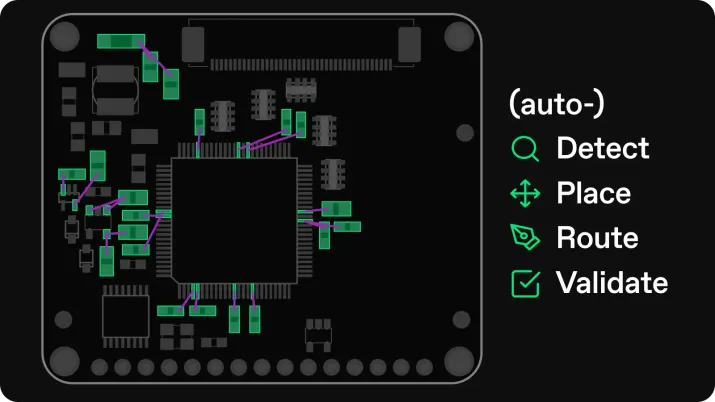
- It identifies key physical considerations like bypass capacitors, impedance-controlled nets, and differential pairs for your review up front
- It generates multiple candidate layouts in parallel, exploring options the team would rarely have time to try manually
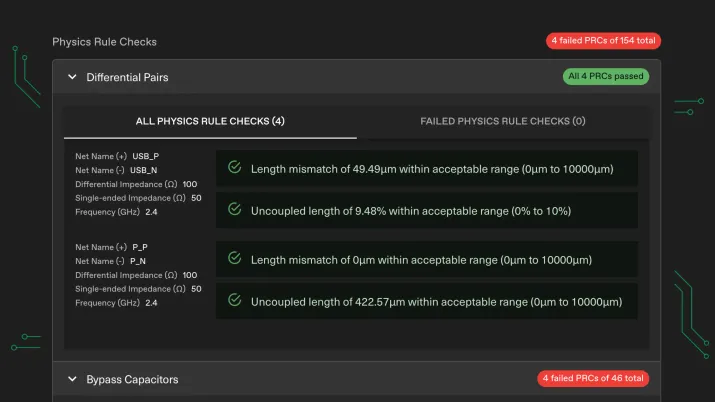
- It evaluates each candidate against the constraint set, producing a clearer “done vs not done” picture for distributed review
The handoff loop across time zones
This is where remote engineering teams feel the difference. Instead of one person being the gate, the workflow becomes a loop:
- Engineer A sets constraints and kicks off runs.
- Quilter generates and evaluates candidates while the team is offline.
- Engineer B reviews, annotates, and requests another exploration pass, then hands it back.
That loop is high-bandwidth collaboration without high-synchrony cost.
Here’s how distributed hardware teams can run an asynchronous PCB workflow
This section is the operating model. The goal is not “add a new tool.” The goal is to make distributed hardware design run like modern async engineering: clear inputs, fast outputs, and reviewable artifacts.
Step 1: Converge on schematics where you already work
Keep your schematic and library workflow intact.
- Altium, Cadence, Siemens, KiCad: use what your team already trusts
- Store projects where collaboration already happens, whether that is a cloud workspace, Git-backed flow, or PLM integration
The key is not migrating tools. It is converging on a constraint-ready schematic with clear net classes and intent, so AI layout has unambiguous inputs.
Step 2: Define constraints that eliminate back-and-forth
Remote teams lose time when constraints are fuzzy, because every ambiguity becomes a meeting later.
Before you run AI PCB layout, capture:
- Stack-up options and impedance targets for controlled nets
- Differential pair definitions, spacing, and length matching rules
- Keep-outs, mounting holes, connector locations, and any “must-not-move” parts
- Manufacturer preferences and DFM limits so candidates are realistic, not theoretical
This is where senior engineers add huge leverage. Fifteen minutes of constraint clarity can save days of remote coordination later.
Step 3: Hand off to Quilter at natural breakpoints
Do not wait for “the perfect moment.” Use Quilter at points where remote bottlenecks hurt most:
- Test fixtures and harnesses
- IC evaluation boards
- Design validation boards
- Backplane and interconnect boards
These are exactly the board types where iteration speed matters and where layout delays cascade. (See Solutions by Design Type, especially test fixtures and IC evaluation boards.)
Step 4: Assign time zones to phases, not meetings
This is the async pattern that actually works:
- Region A owns constraint definition and kickoff
- Quilter runs while everyone is offline
- Region B owns candidate review, issue tagging, and rerun requests
The collaboration artifact becomes a checklist and annotated candidates, not a calendar invite.
Practical tips that make this stick:
- Use a shared “acceptance checklist” per board type (SI rules, PI rules, DFM rules, connector constraints)
- Require every comment to reference a specific candidate and location
- Batch feedback into a single rerun request instead of drip-feeding changes across a day
Step 5: Pull the finished layout back into your CAD tool for finalization
Quilter is designed to work with your existing CAD stack, not replace it.
Once you select a candidate:
- Open the returned files natively in your tool
- Run DRC and any internal sign-off checks
- Polish silk, finalize fab notes, generate manufacturing outputs the same way you do today
This de-risks adoption for remote engineering teams. You do not have to retrain everyone or migrate libraries. You are upgrading the collaboration model, not rebooting the organization.
Ready to test an asynchronous workflow on a real board?
Run a test fixture, IC eval board, or validation design through Quilter’s Free or Startup tiers and measure two things: meeting hours avoided, and layout candidates produced per week.
Start here: Get Started or explore Pricing.
What results can remote engineering teams expect from AI-assisted collaboration?
The most honest way to quantify the benefit is not just “time saved.” It is:
- time saved plus iterations gained
- fewer meetings plus more decisions
- less waiting plus more parallel exploration
Quilter’s positioning is speed with physics-first confidence, and those two together matter for remote teams. Speed without trust just creates more review overhead. Physics-driven PCB design reduces the “everyone hop on a call to sanity-check this” behavior, because candidates come with clearer constraint evaluation and design review signals.
Here is the collaboration translation:
- More candidates per week means fewer high-stakes reviews. When iteration is scarce, every review is tense. When iteration is abundant, reviews become lightweight.
- Layout stops being a single point of failure. Remote PCB specialists are no longer the only path to progress. The team can keep moving, and specialists can focus on the highest-value decisions.
- Engineering bandwidth increases without staffing changes. Electrical engineers can iterate on constraints and intent instead of waiting in line for routing time.
Let’s talk about where AI fits alongside your existing PCB software
If you are searching for the best pcb software for remote engineering teams, you might assume you need to replace your primary tool to fix collaboration. That is the expensive, high-risk path.
Quilter takes the lower-risk path: augment what you already use.
- Format-compatible with major tools. You can work with Altium, Cadence, Siemens, and KiCad projects and receive files you can open, review, and modify in the same environment.
- No library migration required. Remote teams avoid the slow organizational change that comes with switching primary ECAD.
- Works alongside cloud collaboration. Quilter can sit next to Altium 365-style sharing, PLM flows, or Git-backed review patterns by feeding them more frequent, higher-quality board states.
Think of Quilter as a layout acceleration layer. Instead of betting your team on a new editor, you keep the editor and upgrade the workflow.
That matters in distributed hardware design because most collaboration pain is not caused by the UI. It is caused by the pacing of routing, review, and iteration. AI collaboration tools become valuable when they change pacing, not when they add another place to comment.
If you want the broader positioning, the cleanest entry points are Product Overview and Pricing.
How to get started with asynchronous PCB layout on your next program
The fastest way to make this real is to pick a bounded project that already strains remote bandwidth.
Start with a board type where async matters
Good first candidates:
- Test fixture or harness board
- IC evaluation board
- Design validation board
These boards tend to have clear constraints and high iteration pressure, which makes the collaboration benefit obvious quickly.
A simple kickoff checklist
- Pick a design and confirm the schematic is stable enough to route.
- Define constraints and manufacturer preferences up front to reduce back-and-forth.
- Upload your native ECAD project and constraints to Quilter.
- Request multiple candidates so the team can compare tradeoffs.
- Run a deliberate time-zone handoff: Region A kicks off, Region B reviews, no meeting unless blocked.
Download the 1-page checklist PDF:
Asynchronous PCB Workflow Checklist (PDF)
Structure the experiment around collaboration metrics
If you want a clean internal “before vs after”:
- Track meeting hours spent on routing reviews
- Track number of layout candidates reviewed per week
- Track time from schematic freeze to a fab-ready candidate
Then run the same pattern on the next board. Remote engineering teams build confidence when the workflow is repeatable, not when the result is a one-off win.
FAQ
Does Quilter replace my PCB software?
No. Quilter is designed to augment your existing ECAD environment by accelerating layout and generating candidates you can open and finalize in your primary tool. You still run DRC, polish, and release the board the same way you do today.
Can remote teams use Quilter with Altium 365 or other cloud collaboration?
Yes. Cloud ECAD improves sharing and review workflows. Quilter adds compute-driven layout throughput. Together they enable an asynchronous workflow where teams can review routed candidates across time zones without relying on constant overlap meetings.
What kinds of boards are best for a first asynchronous AI layout trial?
Test fixtures and harnesses, IC evaluation boards, and design validation boards are strong starting points because they benefit immediately from faster iteration and reduced scheduling overhead.



.webp)